
When it comes to selecting a faucet for your kitchen or bathroom, durability, performance, and safety are top priorities. But what ensures that a faucet will last for years without leaks, corrosion, or operational issues? The answer lies in a rigorous multi-stage testing process conducted before the faucet leaves the factory.
In this article, we’ll provide a complete overview of faucet testing, explain why it matters, and share insights into the standards and certifications that guarantee high-quality faucets. This guide is ideal for homeowners, contractors, and distributors looking for reliable faucets backed by proven quality.
Why Faucet Testing Matters
Faucets are more than just water outlets—they are precision-engineered devices designed to withstand daily use for years. Without proper testing, even a beautifully designed faucet may develop leaks, fail under water pressure, or have a finish that wears off prematurely.
High-quality faucet testing ensures:
- Leak-free performance
- Smooth handle operation and accurate temperature control
- Durable finishes resistant to corrosion and scratches
- Compliance with international safety and plumbing standards
Manufacturers following strict testing protocols protect both the end consumer and their brand reputation. At Pure Sanitary, strict Faucet Quality Management procedures ensure each product meets export standards.
Pre-Shipment Faucet Testing Process
Most reputable faucet manufacturers follow a comprehensive, multi-stage testing process to guarantee quality. Let’s break it down:
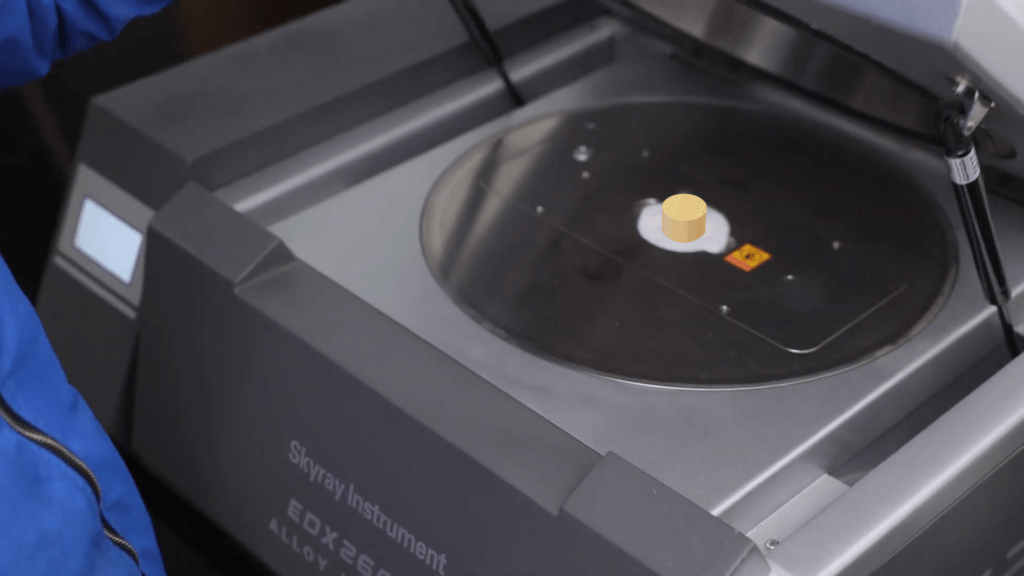
1. Incoming Material Inspection (IQC)
Every faucet begins with quality verification of raw materials. Brass, stainless steel, and other components are tested for:
- Chemical composition and purity
- Lead content compliance (important for safe drinking water)
- Mechanical properties like hardness and durability
Only materials that meet ISO 9001 standards and other local or international safety regulations are approved for production.
2. Component & Cartridge Testing
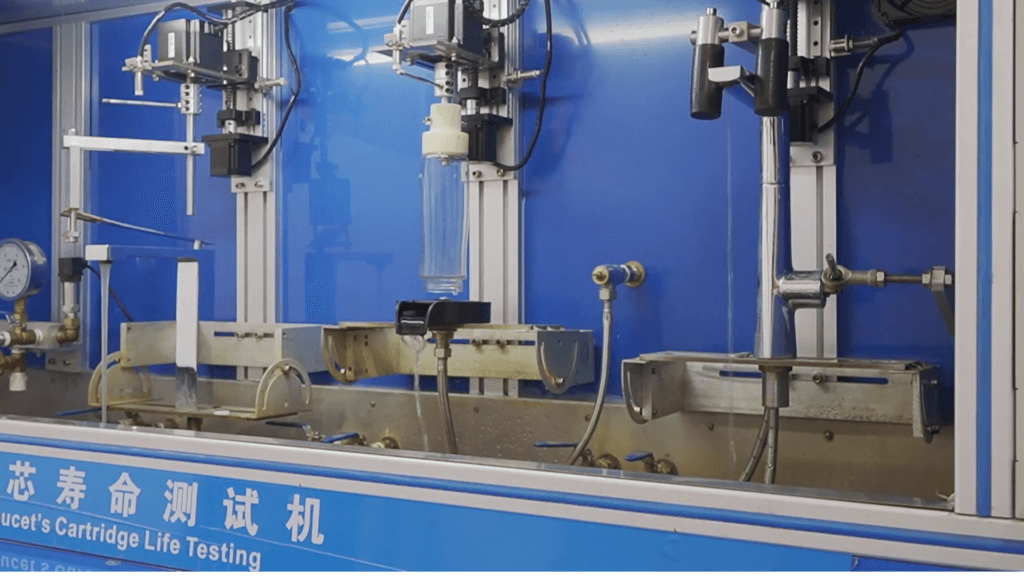
The cartridge is the heart of a faucet. It controls water flow and mixing of hot and cold water. To ensure reliability, cartridges undergo durability testing, including:
- Over 500,000 on/off cycles to simulate years of daily use
- Sealing performance to prevent leaks
- Smooth operation checks
High-quality cartridges reduce maintenance costs and improve customer satisfaction.
3. Dimensional & Machining Inspection
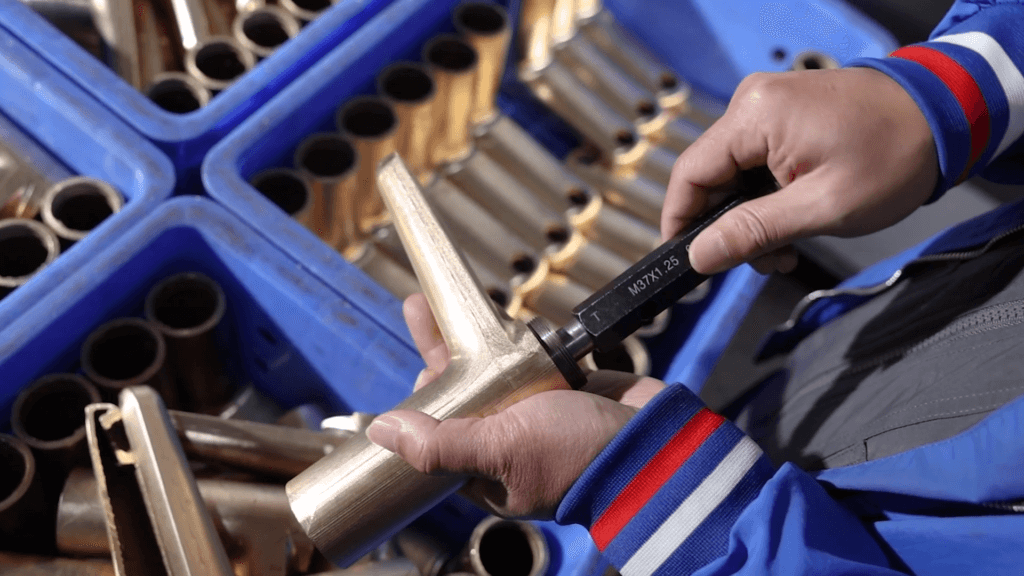
Precision is critical. Each component, from spouts to handles, is checked for:
- Accurate casting and machining tolerances
- Correct wall thickness
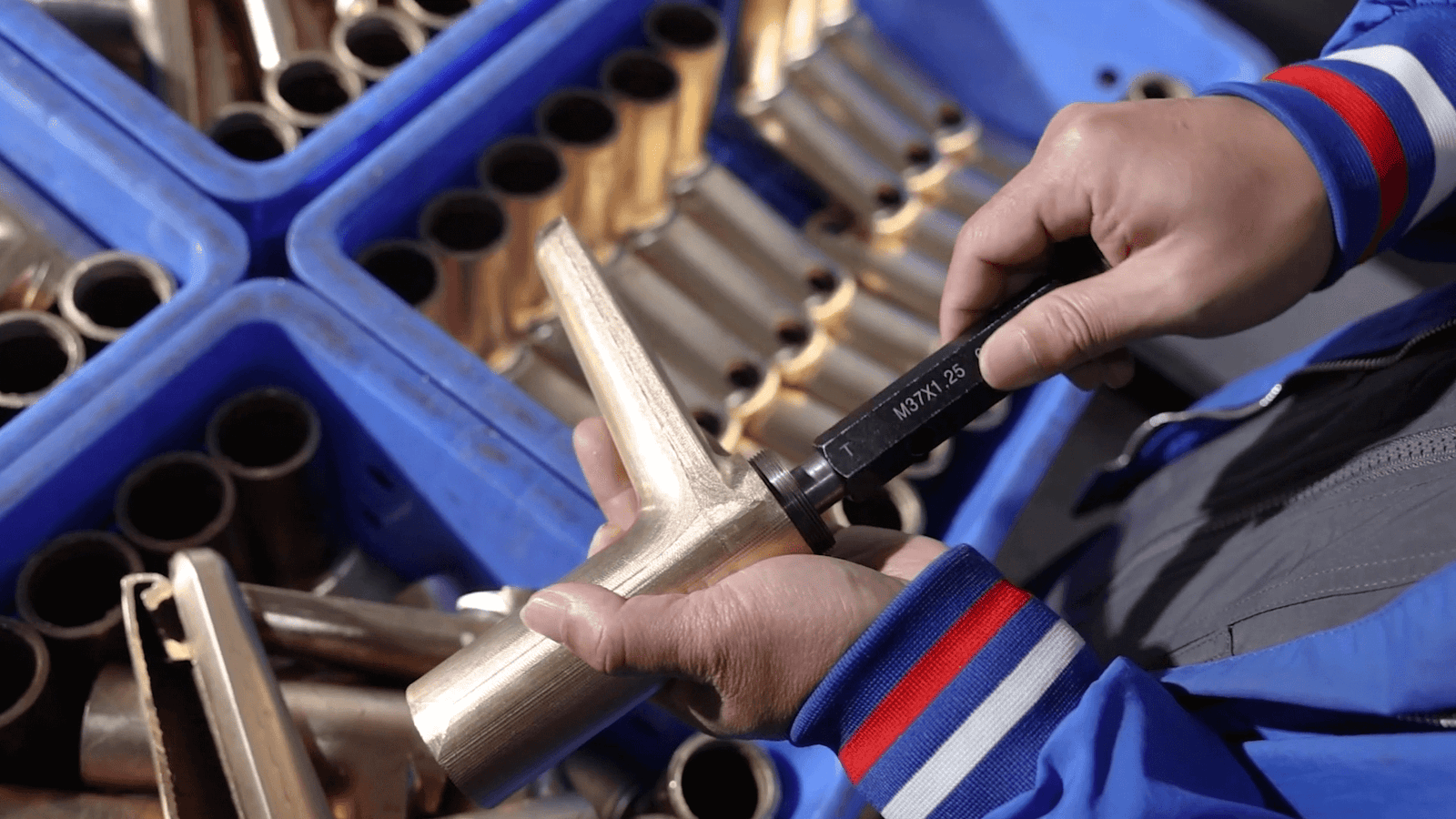
- Threading and fit with other parts
Proper dimensions ensure that faucets assemble correctly and maintain long-term leak resistance.
4. Surface Finishing & Plating Inspection
A faucet’s finish isn’t just aesthetic—it protects against corrosion and wear. Manufacturers test:
- Plating thickness and uniformity
- Corrosion resistance (often 200-hour salt spray tests)
- Scratch and wear resistance
These tests guarantee a faucet will maintain its shine and durability, even in harsh water conditions.
Long-tail keyword: “durable chrome kitchen faucets.”
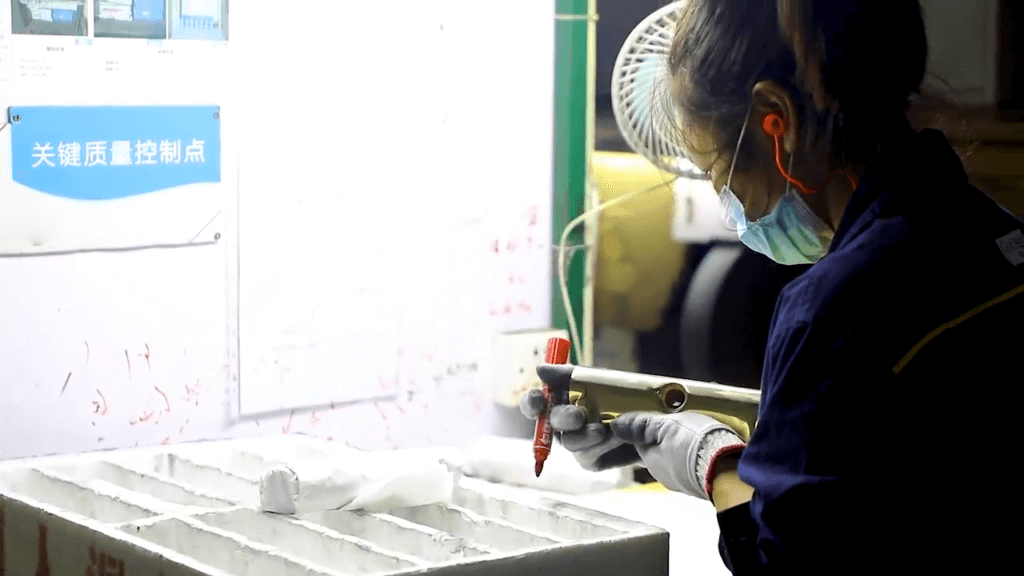
5. In-Process Assembly Inspection (IPQC)
During assembly, faucets are inspected at multiple stages to ensure proper assembly and function. This includes:
- Handle movement and smooth operation
- Preliminary leak testing
- Alignment and tightness of all components
Regular in-process checks prevent defective units from reaching the final stage.
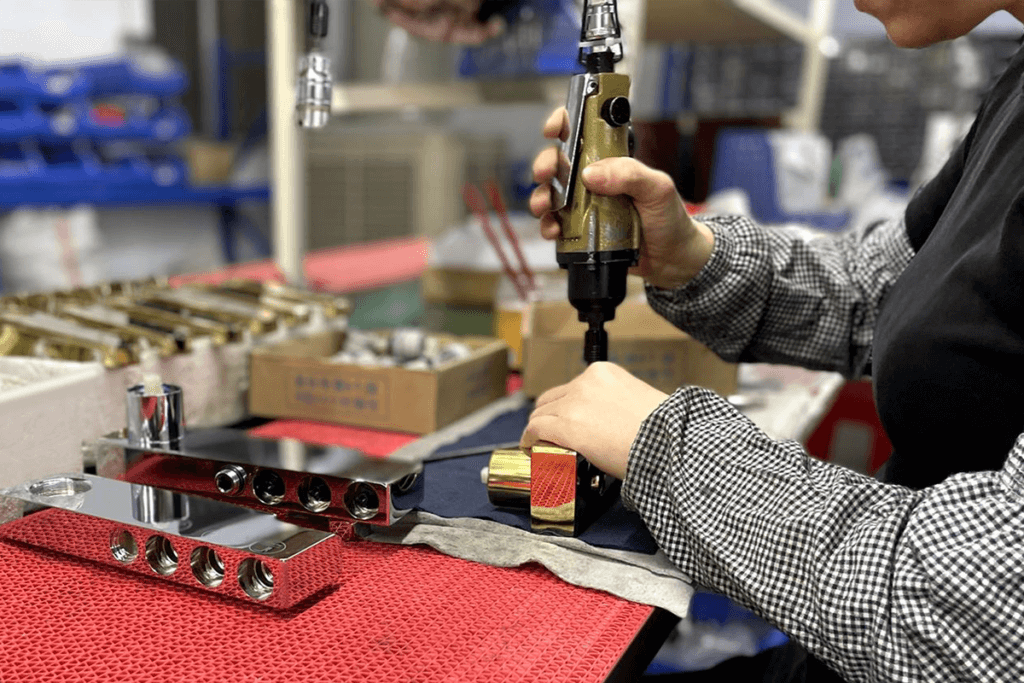
6. 100% Pressure & Leakage Testing
Before leaving the factory, faucets undergo 100% water pressure testing, including:
- Static water pressure tests
- Dynamic water flow tests
This ensures every faucet is leak-proof under normal operating conditions and ready for years of use.

7. Performance & Functional Testing
Faucets are tested for real-world performance, including:
- Flow rate consistency
- Temperature control accuracy
- Noise levels during operation
- Smoothness of handles and spouts
This stage guarantees optimal user experience for both residential and commercial applications.
Long-tail keyword: “high-quality kitchen and bathroom faucets.”
8. Final Quality Control (OQC)
The last stage before shipment is final quality inspection, which includes:
- Visual inspection for scratches, color uniformity, and defects
- Label verification and certification compliance (CE, WRAS, ACS, NSF)
- Packaging integrity to prevent damage during shipping
Only faucets that pass all inspections are approved for shipment.
FAQs About Faucet Testing
Q1: How many tests does a faucet undergo before shipment?
A: Most high-quality faucets undergo at least 8 rigorous tests, covering materials, assembly, pressure, functionality, and appearance.
Q2: Why is corrosion resistance important in faucets?
A: Faucets are constantly exposed to water, including acidic or mineral-rich water. Corrosion resistance prevents leaks, surface damage, and ensures longevity.
Q3: Are all faucets tested 100% before shipment?
A: Reputable brands perform 100% pressure and leak tests on each faucet to guarantee reliability.
Q4: How do certifications affect faucet quality?
A: Certifications like CE, WRAS, ACS, and NSF ensure faucets meet safety, performance, and drinking water standards, giving buyers confidence.
Q5: How can I choose a durable kitchen faucet?
A: Look for faucets with certified materials, multi-stage testing, corrosion-resistant finishes, and warranties. Faucets tested with 500,000+ cartridge cycles and 200-hour salt spray resistance are typically very durable.
Conclusion
High-quality faucets are the result of careful engineering, multiple quality checks, and rigorous testing. From incoming material inspection to final quality control, every step ensures that your faucet is durable, safe, and reliable.
By choosing a faucet from a manufacturer that follows ISO 9001 standards, international certifications, and multi-stage testing, you can enjoy years of leak-free performance, smooth operation, and corrosion-resistant finishes.