
In the competitive market of home and commercial plumbing, water faucet quality management is critical for brand reputation, customer satisfaction, and compliance with international standards. A high-quality water faucet not only functions flawlessly but also exhibits durability, aesthetic appeal, and consistent performance. This article explores comprehensive strategies that water faucet factories implement to ensure quality, from raw material sourcing to final shipment, along with advanced techniques for continuous improvement.
1. Establishing a Robust Quality Management System (QMS)
A structured Quality Management System (QMS) forms the foundation of water faucet manufacturing. Many leading factories adopt international standards such as ISO 9001 to standardize processes and ensure consistency.
Key Steps:
- Quality Policy and Objectives: Factories define measurable targets such as “Zero Defects” or “≥99% Pass Rate” to guide operations.
- Quality Organizational Structure:
- QA/QC Department: Responsible for policies, audits, and inspections
- Shop-floor Quality Inspectors: Conduct in-process checks
- Responsibility Levels: Supervisor, team leader, and operator roles for accountability
- Documentation and Traceability: Standard Operating Procedures (SOPs), inspection protocols, and production records ensure every product is traceable.
2. Raw Material and Supplier Management
The quality of raw materials directly influences the final product. Faucets involve components like copper, ceramic cartridges, plastics, and surface coatings.
Supplier Selection:
- Evaluate supplier certifications and quality records.
- Use a scoring system covering quality, delivery, cost, and service.
Incoming Material Inspection (IQC):
- Inspect dimensions, tolerances, chemical composition, and surface quality.
- Isolate defective materials and maintain detailed records.
3. In-Process Quality Control (IPQC)
Monitoring quality during production prevents defect accumulation and reduces wastage.
Key Controls:
- Critical Processes:
- Casting: Check for porosity, burrs, and dimensional accuracy
- Machining: Ensure thread precision and tolerance
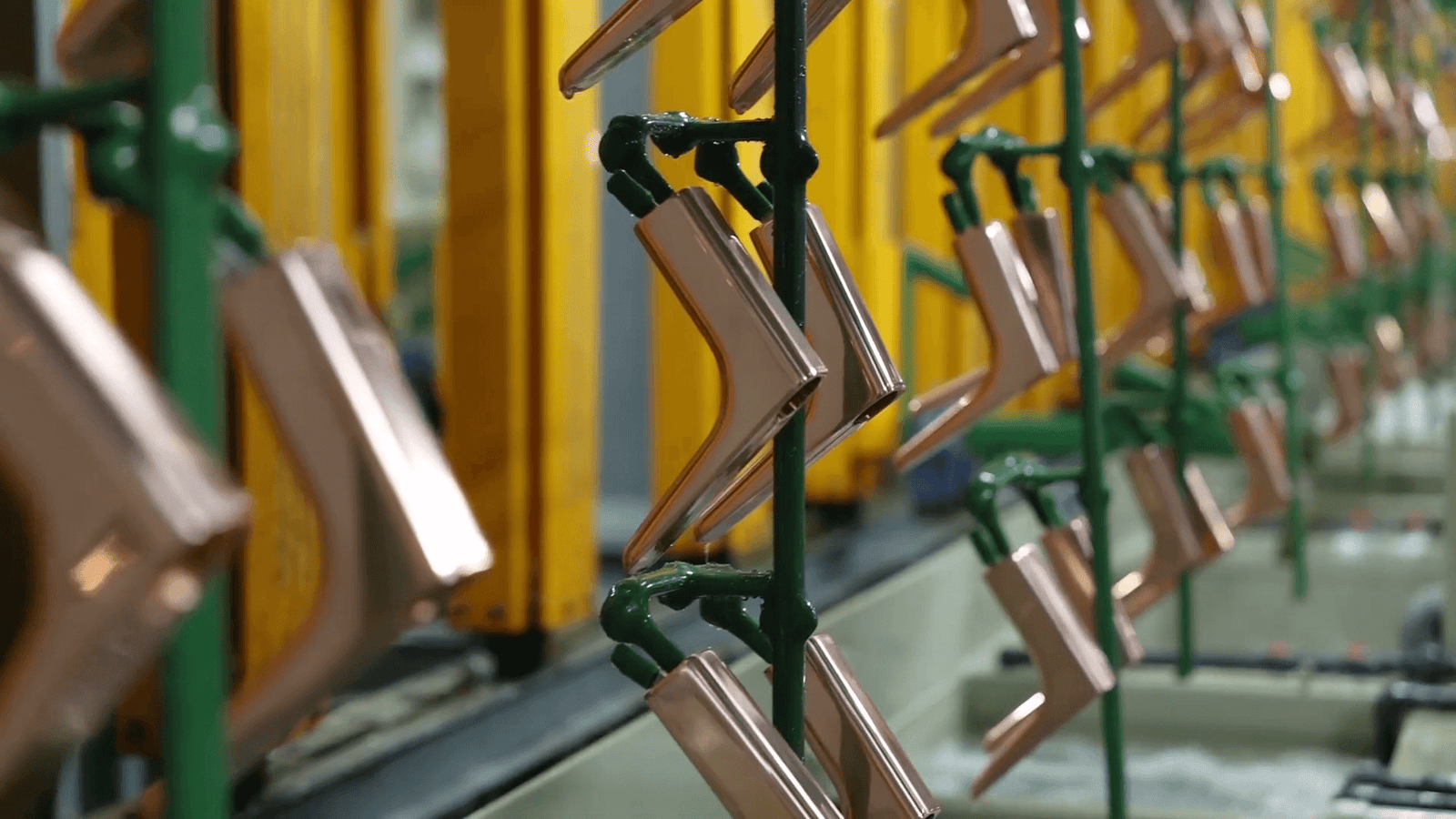
- Plating/Coating: Verify thickness, adhesion, and uniformity
- Online Inspection and Records:
Tools like calipers, projectors, and coordinate measuring machines (CMM) are used for accurate measurement. - Process Improvement:
Statistical Process Control (SPC) helps analyze variation trends. Deviations trigger immediate corrective actions.
4. Final Product Inspection (FQC/OQC)
Before leaving the factory, faucets undergo rigorous Functional and Appearance Testing.
Functional Testing:
- Leak and Flow Tests: Ensure water-tight performance.
- Pressure Resistance Tests: Simulate household water pressure.
- Durability Tests: Evaluate valve lifetime and handle operation cycles.
Appearance Checks:
- Plating uniformity, color consistency, and scratch-free surfaces.
- Dimensional compliance with standards.
Packaging & Shipment:
- Check the packaging for integrity to prevent damage during transportation.
- Maintain batch traceability for customer feedback or recalls.
Internal Link Example: Explore our Faucet Testing Procedures for in-depth procedures.
5. Continuous Quality Improvement
即使生产完成后,保持和提高质量也是一项持续性的工作。
Techniques:
- Root Cause Analysis: Tools like 5W1H and Fishbone Diagrams identify sources of defects.
- PDCA Cycle (Plan-Do-Check-Act): Ensures systematic improvement.
- Customer Feedback Management: Returns, complaints, and warranty claims inform design and process adjustments.
Advanced Tools:
- FMEA (Failure Mode and Effects Analysis): Predict potential failures.
- Lean Manufacturing & Six Sigma: Reduce waste and improve efficiency.
- ERP and Barcode Tracking: Ensure full traceability from raw material to customer.
Internal Link Example: Learn about Lean Manufacturing in Faucet Production to optimize quality and reduce costs.
6. Frequently Asked Questions (FAQ)
Q1: What is the most important step in water faucet quality management?
A1: While all steps are crucial, process control during manufacturing (IPQC) ensures defects are detected early, reducing wastage and maintaining consistent quality.
Q2: How do factories test faucet durability?
A2: Faucets undergo pressure testing, leak testing, and life-cycle handle operation tests to simulate long-term usage.
Q3: Why is supplier evaluation critical?
A3: High-quality raw materials such as copper and ceramic cartridges are essential for product performance and longevity. Supplier evaluation ensures consistent material standards.
Q4: How can technology help in quality management?
A4: Tools like CMM, SPC, ERP systems, and FMEA allow precise measurement, statistical analysis, and full traceability, supporting continuous improvement.
Q5: How does customer feedback influence quality management?
A5: Feedback from returns, complaints, or reviews is analyzed to adjust processes, redesign parts, and prevent future defects, closing the quality improvement loop.
Conclusion
Effective water faucet quality management combines a structured quality management system, stringent raw material inspection, rigorous in-process controls, and final product testing. By continuously analyzing data, implementing advanced tools like FMEA and SPC, and leveraging customer feedback, manufacturers ensure faucets that meet the highest standards of functionality, durability, and appearance.
A commitment to quality is not just a compliance requirement—it is a strategic advantage that builds brand reputation, reduces costs, and guarantees customer satisfaction.